Table Of Content

The Every Student Succeeds Act (ESSA) encourages states and districts to use federal funding to help teachers expand the use of UDL. See more on UDL principles and how they can be applied, or use a course accessibility checklist to check how accessible your course is. CAST created the Universal Design for Learning framework, and it remains one of our core levers of change to help make learning inclusive and transformative for everyone.
In the classroom
Interact with flexible content that doesn't depend on a single sense like sight, hearing, movement, or touch. The reflection and redesign phase allows you to consider your next instructional moves. Being adaptable means allowing for adaptive software and hardware for students that have limitations.
What Is Universal Design For Learning? (Examples & Best Practices)
Universal Design for Learning (UDL) is an educational framework that leverages scientific knowledge about human learning processes to create flexible learning environments. UDL aims to provide all students with equal opportunities to succeed by removing barriers and accommodating individual differences. Universal design for learning (UDL) is a teaching approach that works to accommodate the needs and abilities of all learners and eliminates unnecessary hurdles in the learning process. Over a billion people globally have a disability and they can often face barriers when visiting online learning environments. 10% of the population have learning disabilities and 15% have dyslexia. Later, that led to attempts to rehabilitate and accommodate for differences.
Education
For instance, students may be able to create a podcast or a video to show what they know. There are tons of possibilities for completing assignments, as long as students meet the lesson goals. In this model, student engagement includes motivating students toward learning in the classroom. Representation involves supporting a student’s education needs based on factors like disabilities, cultural or language backgrounds, and other needs. And finally, action and expression refers to providing students with means to engage in class based on those needs. Examples of universal design for learning include the use of flexible workspaces, accessible digital texts, and student choice throughout learning experiences.
Universal Design for Learning Guidelines
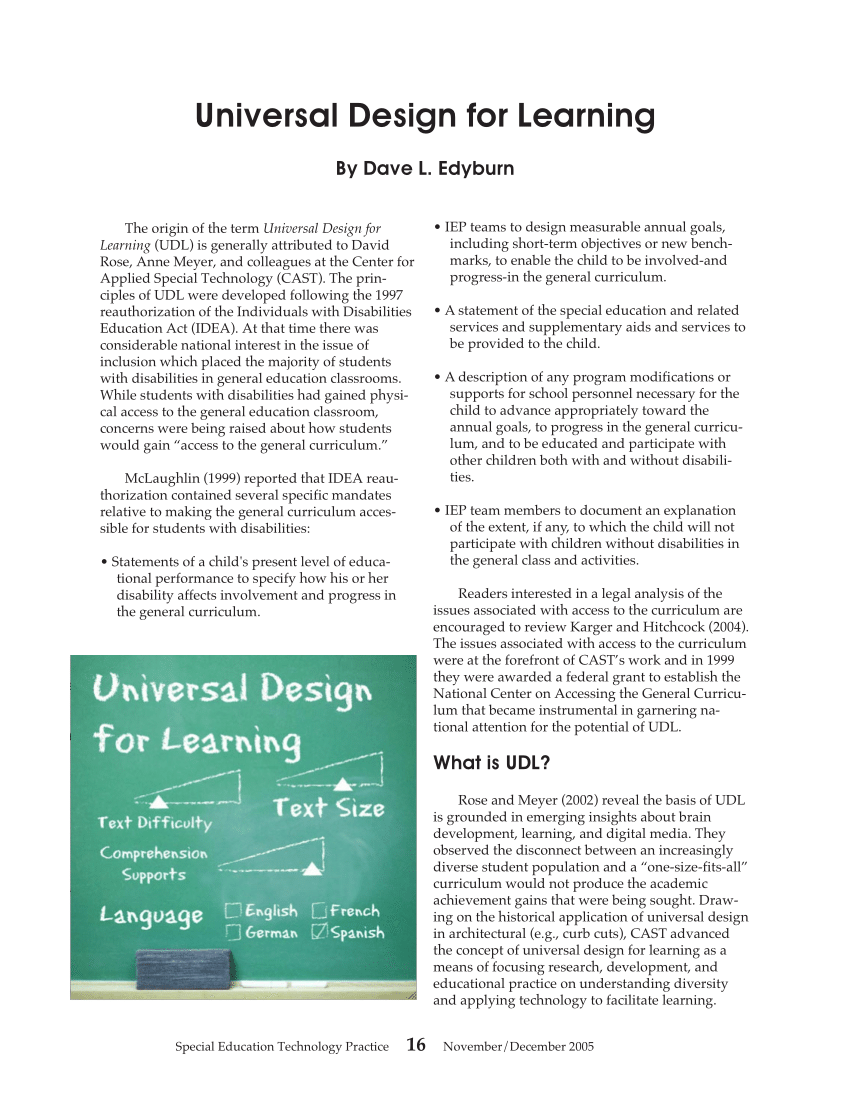
Whenever possible, students should be able to access information in both the dominant language of the school and in their own native language. Ideally, students should also have some flexibility within these different formats. For example, using a digital textbook allows students to adjust the size of the font or the color of the background.
In these missions, teachers are encouraged to understand UDL and incorporate it in their learning environment to foster inclusivity. You may want to consider using UDL if you are looking for ways to differentiate instruction, offer multiple means of expression, provide accommodations, and promote inclusivity. Once you have assessed your students’ needs, you can customize your instruction to meet their individual needs. This could mean providing different representations of the content, different ways for students to interact with it, and different ways to express themselves.
Principles of a Universal Design for Learning Approach
Applying Universal Design for Learning (UDL) Supports Inclusive Education - Tolerance.org
Applying Universal Design for Learning (UDL) Supports Inclusive Education.
Posted: Mon, 11 Mar 2024 07:00:00 GMT [source]
Barriers to learning can be physical and mental, social and medical. This approach to teaching or to workplace training doesn’t specifically target people who learn and think differently. But it can be especially helpful for kids with these challenges — including those who have not been formally diagnosed. Over time, UD's reach expanded to digital spaces like the internet and audiovisual media. This shift from physical to digital environments inspired educators, who applied UD tenets to the barriers of traditional course design (Tobin & Behling, 2018). Even if you’re not familiar with the term universal design, you’ve likely encountered many examples of it in your everyday life.
It may be useful to begin with an explanation of what Universal Design for Learning, or UDL, is not. It is not a one-size-fits-all teaching method that assumes all students learn in the same way. What it is is a system that gives all students an equal opportunity to succeed by providing teachers with the knowledge to meet students where they are. For example, you might use a software program that allows students to input their responses differently or a website that provides audio versions of articles. You can also use online learning programs like SplashLearn, making learning more fun using game-based activities. The third core principle of UDL is to provide multiple means of engagement.
One example of this is posting goals for specific lessons in the classroom. Students might also write down or insert lesson goals in their notebooks. At the core of the UDL framework is providing students with the individualized support they need to succeed. Universal design for learning is an incredible tool in the classroom.
For example, you might try to use diverse images and illustrations in your instruction, or you might provide accommodations for students with disabilities. Universal Design in Learning (UDL) is an educational framework that aims to create diverse and flexible learning environments that will accommodate a wide range of learner needs. The UDL Guidelines are a living, dynamic tool that is continuously developed based on new research and feedback from practitioners. In 2020, CAST launched our most recent effort to update the UDL Guidelines, with a specific focus on equity. There has been a strong call from the field—both practitioners and researchers alike—to more fully develop the Guidelines to address critical barriers rooted in biases and systems of oppression.
Practicing the core skills of Universal Design for Learning as you build your courses will ensure there are fewer barriers to learning for all of your students. The goal is a learning experience where students can easily and confidently navigate content leaving them more motivated to learn. Students will leave having had a positive experience and be ready to share how much they learned. Add them to your learning design process to improve accessibility and inclusion for all of your students. The goal of Universal Design for Learning is to remove barriers to learning. Barriers to learning exist in a wide swath of the population at different times and in different environments.
All three advocate for accessible and inclusive instructional approaches that meet the needs and abilities of all learners. Plus, they’ll become more familiar with the flexible tools and strategies available to them. Lesson planning with UDL will become more automatic and will help the full range of students to become expert learners. In this guide, you’re going to learn that universal design for learning is focused on flexibility and adaptability to different types of students.
Not all children were created the same, but it sure does seem that all classroom seating was created the same. Hard-back wooden chairs and desks, all arranged in rows, has been the standard arrangement since the one-room school house from 100+ years ago. One key component of UDL is creating flexible physical environments that take into account learner needs. With the increasing integration of technology into instruction, UDL is being seen across a wide range of curricula. “Universal Design is the design of products and environments to be usable by all people, to the greatest extent possible, without the need for adaptation or specialized design." UDL is regarded so highly that it’s mentioned by name in the nation’s main education law.
Offering multiple means of representation for your course content ensures students can access the same information in various modes, such as visual, auditory, or textual. This is an important component of accessibility but will improve the course experience for your entire class. While accessible design is imperative for people with disabilities, all learners take advantage of accessibility features depending on the situation (Chisholm & May, 2009). For example, a student studying in a noisy coffee shop will benefit from captions when viewing a lecture video in CarmenCanvas. It can be helpful for all kids, including kids with learning and thinking differences.


No comments:
Post a Comment